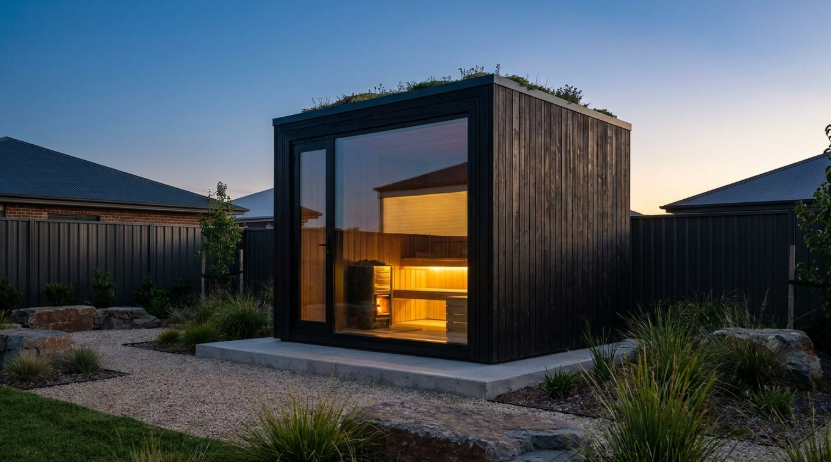
Winter is when a cabin sauna earns its keep the most, since the sharp contrast between a heated 170 to 190 degree interior and freezing outdoor air makes each session feel more dramatic, and the structure’s kiln-dried wood and insulated walls hold heat efficiently even in cold climates. Cold-weather use also comes with a built-in cooling step: stepping outside into snow or cold air works as a free alternative to a dedicated cold plunge. Here is what actually changes about owning and running a cabin sauna once temperatures drop.
The Heat Feels More Intense Against Cold Air
Moving from a below-freezing yard into a 170 to 190 degree cabin creates a temperature swing of well over 150 degrees in a matter of seconds, which is a far sharper contrast than the same cabin offers on a mild summer evening. Many regular winter users say this makes each session feel more restorative than an equivalent one in warmer months, even though the cabin interior itself is set to the same temperature year-round. The contrast, not a change in the heat source, is what shifts the experience.
How Insulated Walls Handle Cold Climates
A cabin’s kiln-dried wood walls and sealed door are built to hold heat, which matters more in winter than any other season. A well-built cabin in a cold climate typically only needs a few extra minutes of pre-heat time in deep winter compared with summer, since the insulated structure limits how much heat escapes once the interior is up to temperature. Cabins sited in an unheated garage or fully outdoors will run slightly longer pre-heat cycles than one in a semi-sheltered spot, so factor that into how far ahead you start the heater on the coldest days.
What Snow and Roof Pitch Mean for a Winter Cabin
Most cabin roofs are built with enough pitch that snow sheds naturally rather than piling up, which matters for both appearance and structural load over a winter season. In regions with heavy, wet snowfall, it is still worth clearing accumulated snow off the roof by hand every few weeks during a particularly snowy stretch, since sustained heavy loads sitting for weeks can stress roofing materials even on a well-pitched design. Checking that the door and any vents stay clear of drifting snow also keeps airflow and access working the way they should through the season.
Snow Instead of a Cold Plunge: Does It Work?
Stepping directly from a hot cabin into snow, or simply standing in freezing outdoor air for a minute or two, produces a similar rapid cooling effect to a dedicated cold plunge tub without any extra equipment. For most healthy adults this is a safe, effective substitute during the months when snow is available, and it costs nothing beyond the sauna itself. The same caution that applies to any cold plunge applies here: people with heart conditions, uncontrolled blood pressure, or who are pregnant should approach sudden cold exposure of any kind more carefully, easing into shorter exposure rather than a full snow roll on the first try.
Does Winter Use Cost More to Run?
Slightly, yes. Colder incoming air means the heater has to work a bit harder to reach and hold the same set temperature, which can add a modest amount to a winter month’s electric bill compared with a summer one, often in the range of a few extra dollars per session rather than a dramatic jump. A well-insulated cabin limits this difference substantially compared with a poorly sealed or uninsulated structure, which is one more reason build quality matters more in cold climates than mild ones.
What Does the Evidence Actually Say About Cold-Weather Sauna Use?
The core research behind sauna’s cardiovascular associations comes from Finnish cohort studies tracking habitual, year-round use rather than winter sessions specifically, so there is no separate body of evidence showing winter sauna use is more beneficial than summer use physiologically. A Mayo Clinic Proceedings review of the evidence found regular sauna bathing associated with favorable cardiovascular and general health outcomes across consistent long-term users, and a 2023 follow-up review in the same journal found the combination of sauna use with other healthy lifestyle habits associated with additional benefit beyond sauna alone. These are association findings from populations using saunas consistently across all seasons, not proof that winter sessions specifically change outcomes, so the practical case for winter ownership is really about consistency and the appeal of the contrast rather than a distinct physiological advantage.
What Should You Check Before Winter Sessions Start?
Give the door seal a quick inspection before the cold sets in fully, since a gap that was barely noticeable in mild fall weather can let a meaningful amount of heat escape once outdoor temperatures drop well below freezing. Clear a path from the house to the cabin before the first real snowfall, both for safety walking in bare feet or sandals between rounds and to keep ice from building up on a surface you will be crossing repeatedly through the season. If the cabin sits somewhere exposed to wind, a simple windbreak or its natural siting behind the house can meaningfully cut how hard the heater has to work on the coldest, windiest evenings.
Is Winter a Smart Time to Buy?
Ordering and installing before winter fully sets in, or even during the early winter off-season, often means less pressure on delivery timelines than the busier spring buying season when many households are shopping at once. Getting the base prepared and the cabin assembled before the coldest weeks arrive also means it is ready exactly when interest in warming up peaks, rather than waiting through a build queue once everyone else has the same idea. Households comparing current cabin sizes and pricing before a winter purchase can review the lineup at https://sweatdecks.com, which lists footprints and heater ratings suited to different climates.
Frequently Asked Questions
Does a cabin sauna cost more to run in winter?
Slightly. Cold air means the heater works a bit harder, but a well-insulated cabin keeps the difference modest.
Can snow load damage a cabin sauna’s roof?
Most roofs are pitched to shed snow, though heavy, wet snowfall benefits from occasional manual clearing in some regions.
Is stepping into snow after a sauna session safe?
For most healthy adults, yes, similar to a cold plunge. Anyone with a heart condition or high blood pressure should be more cautious.
Is winter a good time to buy a cabin sauna?
Often, since demand and pricing can ease in the off-peak months before spring buying season picks up.
Does cold weather use provide any real health benefit over summer use?
The core cardiovascular associations come from year-round habitual use, not winter sessions specifically, so the main advantage is consistency and contrast.
References
- “Cardiovascular and Other Health Benefits of Sauna Bathing: A Review of the Evidence.” Mayo Clinic Proceedings, 2018. https://pubmed.ncbi.nlm.nih.gov/30077204/
- “Does the Combination of Finnish Sauna Bathing and Other Lifestyle Factors Confer Additional Health Benefits? A Review of the Evidence.” Mayo Clinic Proceedings, 2023. https://pubmed.ncbi.nlm.nih.gov/37270272/
- “Effects of heat and cold on health, with special reference to Finnish sauna bathing.” American Journal of Physiology – Regulatory, Integrative and Comparative Physiology, 2018. https://pubmed.ncbi.nlm.nih.gov/29351426/
By Julia Ashwell